

Dhaka, 30 July 2026: The Bangladesh Meteorological Department (BMD) has developed a high-resolution climate projection dataset and an advanced storm surge model to strengthen Bangladesh’s resilience against the increasing impacts of climate change. As part of the JICA-funded Technical Assistance Project (TAPP), “Strengthening the Capacity of Weather and Climate Services,” the Bangladesh Meteorological Department (BMD), in collaboration with the Japan International Cooperation Agency (JICA), conducted a series of capacity development training programs in July 2026. The program featured leading Japanese experts in climate change and storm surge modeling.
Dr. Akihiko Murata and Dr. Nadao Kohno from the Meteorological Research Institute (MRI) of the Japan Meteorological Agency (JMA) shared their expertise with BMD officials and stakeholders through technical sessions and knowledge exchange activities.
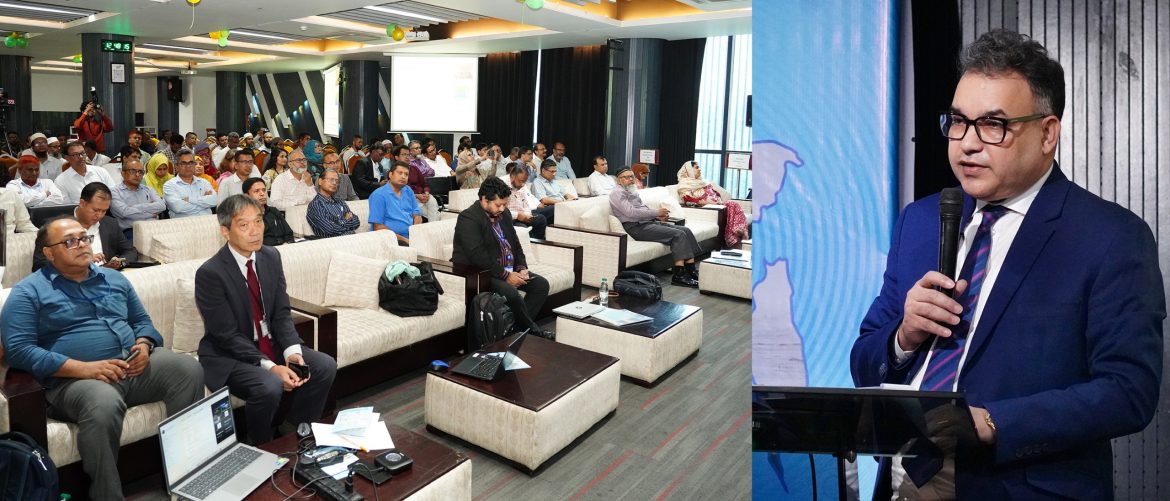
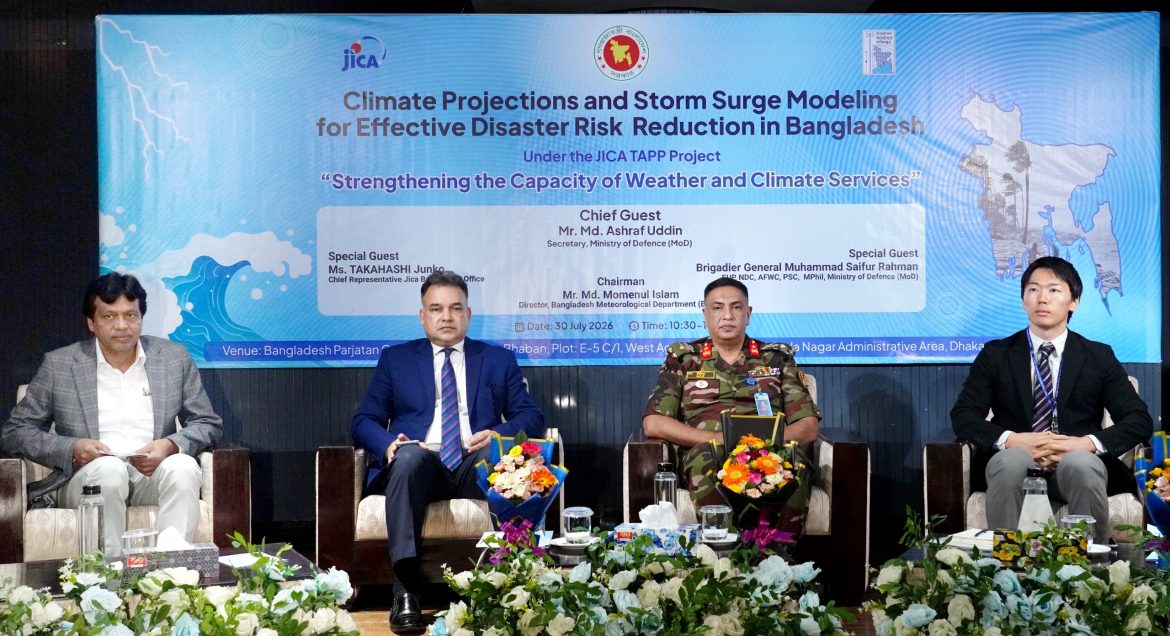
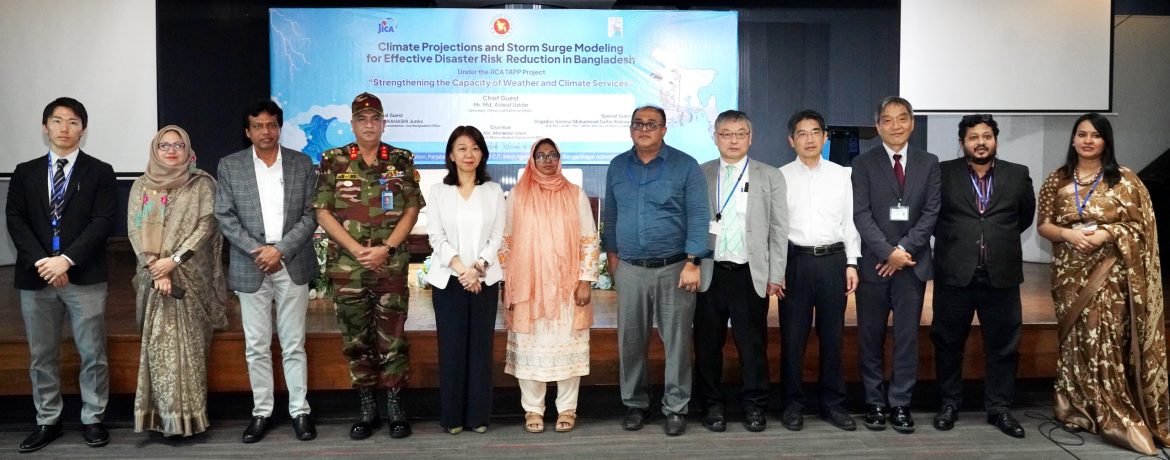
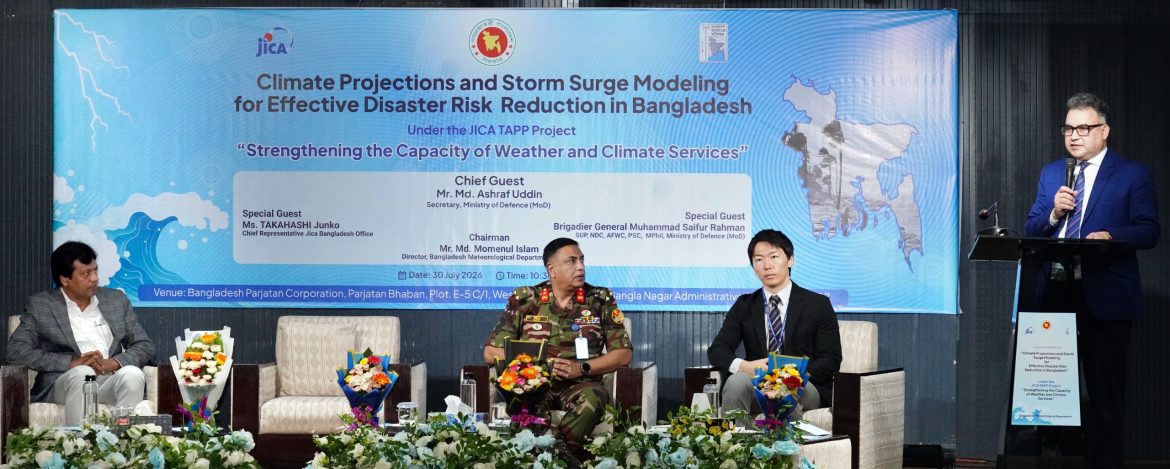
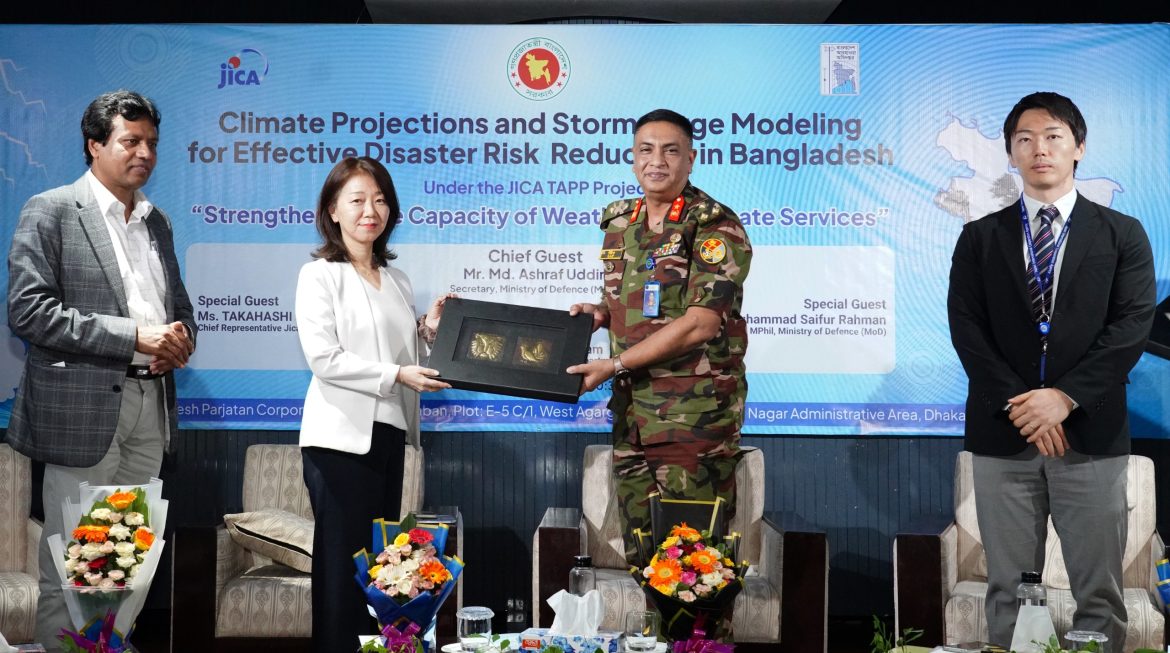
To mark this milestone, BMD and JICA jointly organized an open seminar on 30 July 2026, titled “Climate Projections and Storm Surge Modeling for Effective Disaster Risk Reduction in Bangladesh,” held at the Bangladesh Parjatan Corporation in Dhaka. The seminar showcased the latest findings on climate change projections and introduced BMD’s new operational storm surge forecasting model designed to improve preparedness for increasingly intense cyclones.
Mr. Md. Ashraf Uddin, Secretary, Ministry of Defence, attended the seminar as the Chief Guest. Ms. Takahashi Junko, Chief Representative of JICA Bangladesh, and Brigadier General Md. Saifur Rahman, Wing Chief (Wing-3), Ministry of Defence, joined as Special Guests. The event was chaired by Mr. Md. Mominul Islam, Director of the Bangladesh Meteorological Department.
The seminar was attended by representatives from the Ministry of Defence, Bangladesh Meteorological Department, and a wide range of stakeholder organizations, including the Department of Disaster Management (DDM), Ministry of Disaster Management and Relief (MoDMR), Bangladesh Water Development Board (BWDB), Flood Forecasting and Warning Centre (FFWC), Bangladesh Inland Water Transport Authority (BIWTA), Department of Agricultural Extension (DAE), Department of Fisheries (DoF), Department of Livestock Services (DLS), Dhaka North City Corporation (DNCC), University of Dhaka, Roads and Highways Department, Cyclone Preparedness Programme (CPP), RIMES, Save the Children, CARE Bangladesh, Bangladesh Rice Research Institute (BRRI), Bangladesh Red Crescent Society, icddr,b, Institute of Epidemiology, Disease Control and Research (IEDCR), Ministry of Agriculture (MoA), Directorate General of Health Services (DGHS), as well as officials from the Economic Relations Division (ERD), Planning Commission, IMED, and JICA Bangladesh, including technical experts.
Bangladesh remains one of the world’s most climate-vulnerable countries. Cyclones, floods, thunderstorms, heatwaves, and heavy rainfall continue to threaten lives, livelihoods, and national development. During the seminar, experts presented the latest climate
projections for Bangladesh, shared examples of climate adaptation initiatives implemented by local governments in Japan, and introduced BMD’s newly operational storm surge forecasting system.
Key findings and new capabilities include:
- Increased monsoon rainfall, particularly over the northeastern region of Bangladesh.
- Higher likelihood of torrential rainfall, increasing the risk of flash floods.
- More frequent and intense heatwaves, including occurrences after the onset of the monsoon season.
- Increased frequency of dense fog during winter and the post-monsoon period.
- A new operational storm surge model capable of accurately forecasting storm surge height and its evolution.
- Forecasting of potential coastal inundation areas based on storm surge predictions.
- An upgraded sea wave model providing more accurate daily wave height forecasts.
- The storm surge forecasting system is now operational, with forecasts available through the BMD website.
These developments were made possible through the technical support of JICA and the Meteorological Research Institute of the Japan Meteorological Agency. Continued collaboration is expected to further strengthen knowledge sharing, scientific cooperation, and climate adaptation efforts in Bangladesh. The initiative also contributes to the World Meteorological Organization’s Early Warnings for All (EW4All) global agenda.
Speakers at the seminar commended JICA’s long-standing partnership with Bangladesh and highlighted that its technical assistance has significantly strengthened BMD’s forecasting capacity. BMD reaffirmed its commitment to continuously improving forecast accuracy, expanding public awareness, and enhancing coordination with government agencies, the media, and local authorities to better protect communities from weather- and climate-related hazards.
